Intelligence is learning to move.
Physical intelligence brings a different test: acting in a world that cannot simply be regenerated when something goes wrong.
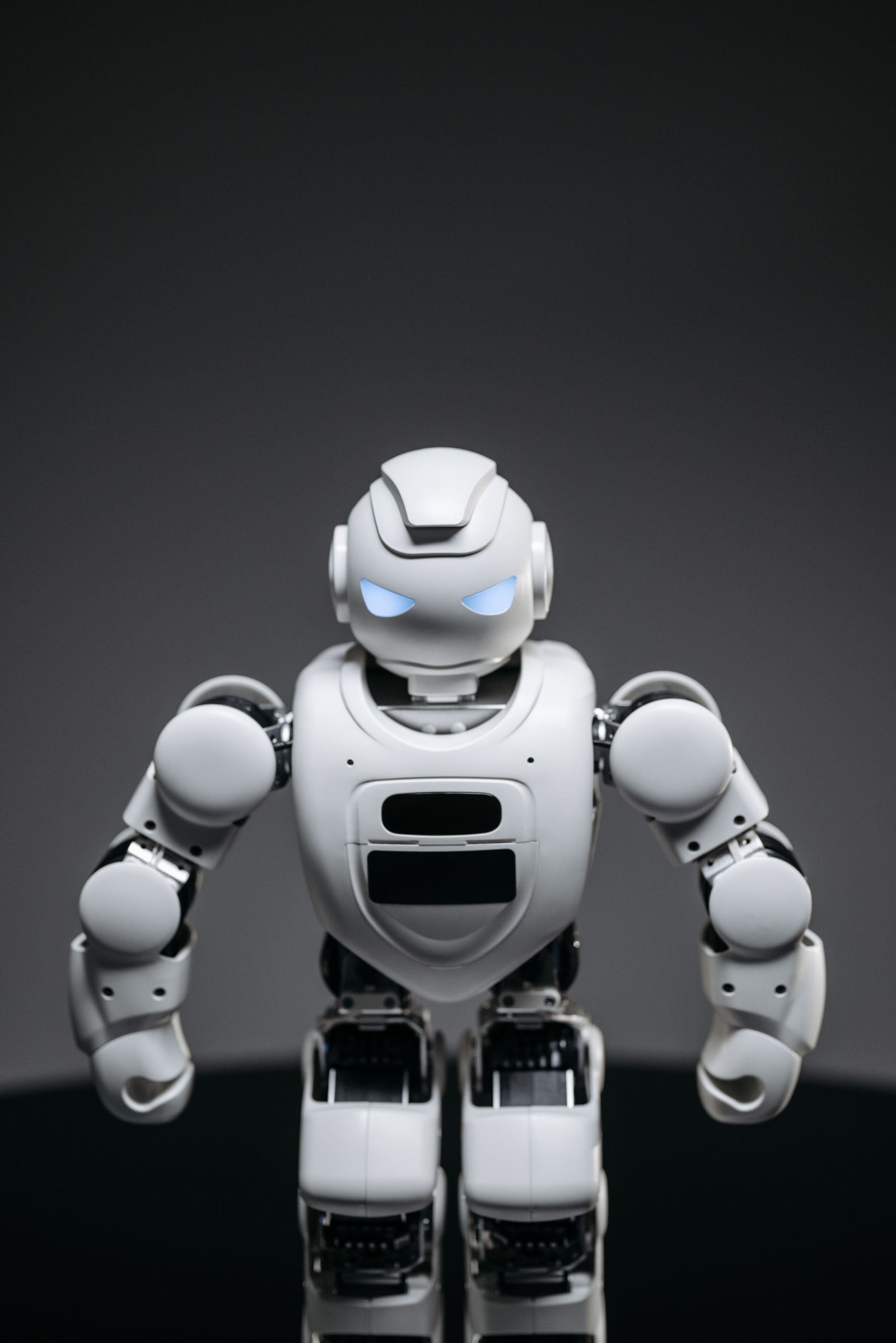
Illustrative photograph: Pavel Danilyuk / Pexels. Not a Hypetell product or a depiction of the research models discussed.
The world as an input
A useful physical action depends on more than recognising an object. A system needs to relate what it sees to a position, a movement and a changing environment. An instruction such as “put this on the shelf” hides a remarkable amount of context.
Google DeepMind’s Gemini Robotics announcement describes a vision-language-action model designed to connect multimodal understanding with robotic actions. Its on-device follow-up explores running a robotics model locally. These are research and developer announcements, rather than evidence that general-purpose robotics has been solved.
A different kind of interface
Our view is that embodied AI changes the relationship between people and machines. Instead of specifying every motion, a person might express an intention and help a system resolve the remaining ambiguity. The quality of that exchange becomes part of the engineering problem.
Imagine an illustrative workspace in which a robot sorts components. A useful interface would show which object the system selected, where it intends to put it and how a person can interrupt. An uncertain instruction should produce a question before a movement.
Look beyond the demonstration
For a builder evaluating a physical system, we would ask for a wider picture than a successful video. How many trials were attempted? How varied were the objects and surroundings? How often did a person intervene? What happened after an unsuccessful attempt?
These questions create a bridge between research performance and a practical environment. The conditions of a test are part of the result, especially when changes in lighting, position or equipment may affect the outcome.
Useful evaluation also includes the surrounding experience: setup, maintenance, accessibility and the way responsibility is handed back to a person.
Why Hypetell is watching
Embodied intelligence connects several fields we care about: machine perception, simulation, human interaction and adaptive systems. Advances in one field can suggest new experiments in another.
We are particularly interested in how spatial interfaces could make a machine’s intended action easier to understand. That is an exploration direction, not a product claim. It starts with a clear design goal: help a person see what a system is about to do, while there is still time to guide it.
SOURCES & FURTHER READING
Google DeepMind — Gemini Robotics ↗Google DeepMind — Gemini Robotics On-Device ↗Research and official event materials inform this article. Commentary and illustrative scenarios reflect Hypetell’s editorial perspective.